

This is a series of journal entries from my recent trip to the mountains...which I fell in love with originally when I first visited K2. Read about that here.
This is Part 3. Part 1 can be read here, and Part 2 here.
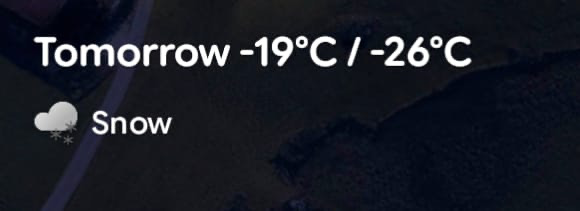
It’s interesting how fast one’s body adapts. Yesterday, I was numb, and my blood oxygen had begun to fall. The advice was to focus on the next thing you had to do, and to maintain your routine to whichever extent possible.
I did that - woke up to a frozen set of eyeglasses and water, and continued to go warm up some ice water for a semi cold cup of morning coffee. Once that mental barrier had been crossed, my brain settled into business as usual.
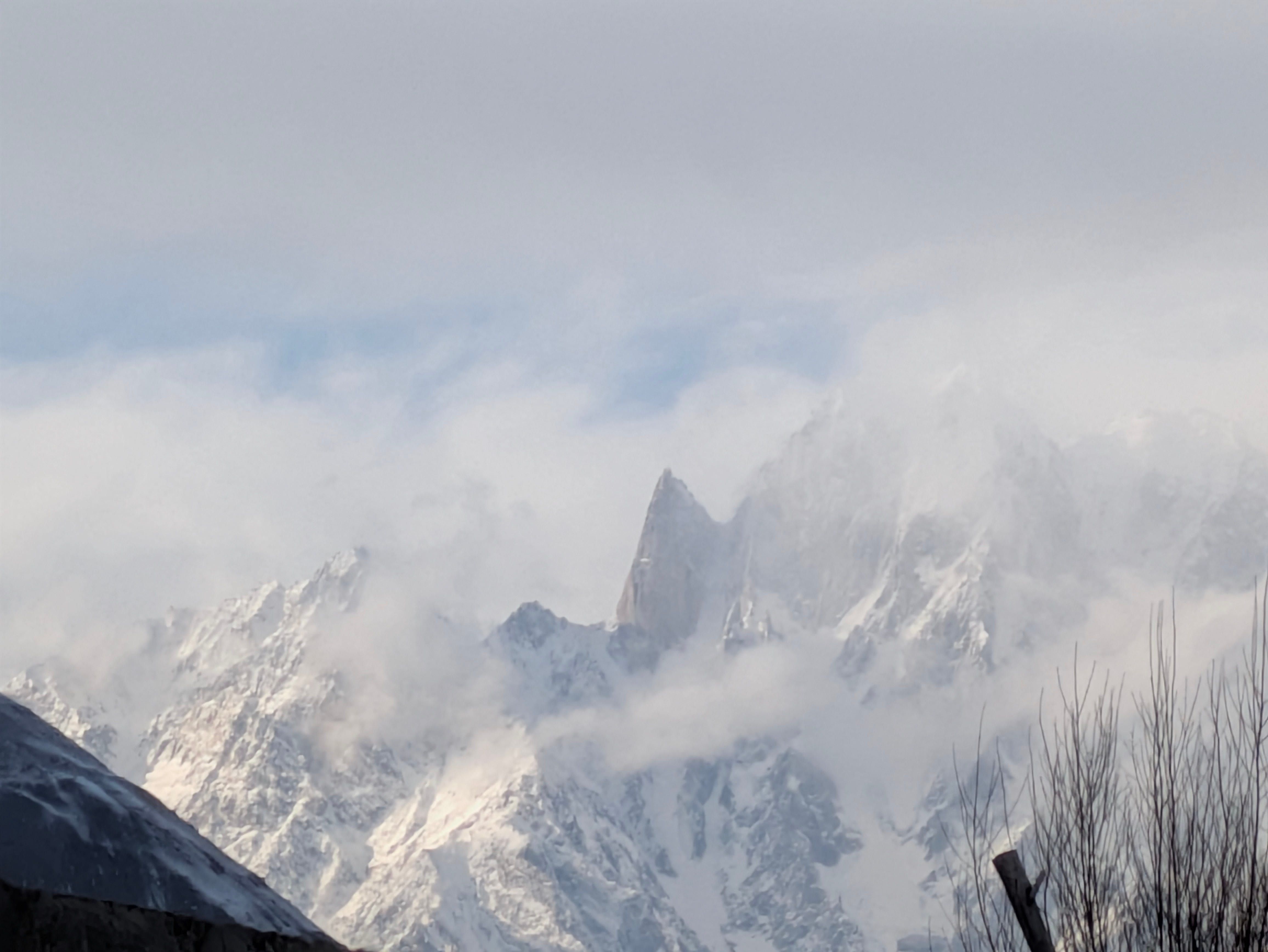
Today was anything but that though. We kicked off with a review of all our gear.
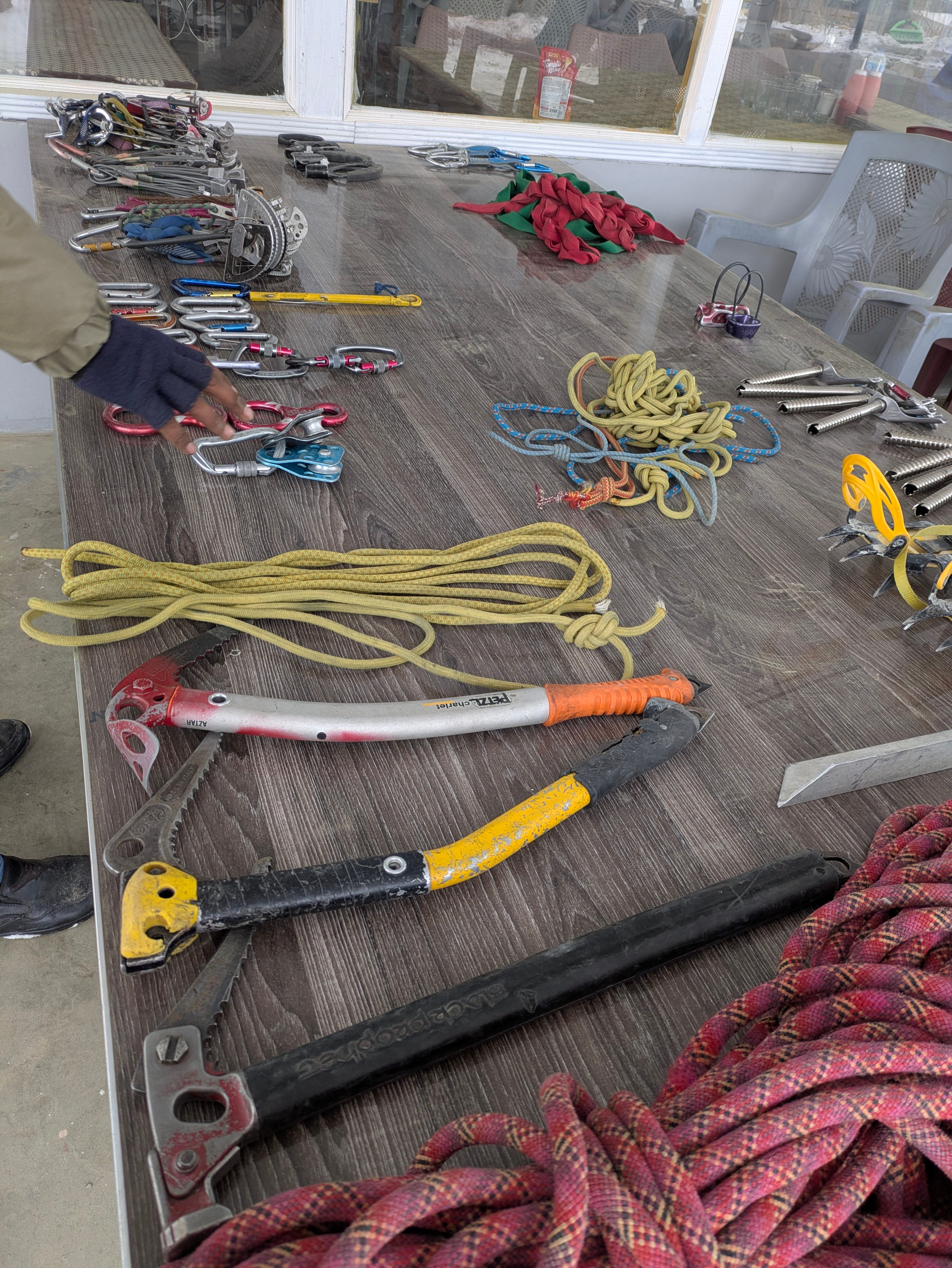
Months ago, I had spent money on a pair of mountaineering shoes and a jacket. Today I saw that investment bear fruit.
I had been miserable yesterday, feeling like my toes would fall of any moment. Today, the monster mountaineering shoes hugged my feet, and it felt like I’d put them inside a sauna. What a joy to have the right equipment!
Towards the middle of the day, the conversations and lessons turned serious: what to do when you slip and fall off the side of a mountain, how to react when you fall inside a crevasse, etc.
One of the most striking things about mountaineering is that the default mode is every man for himself.
If you’re leading a course and there are 15 people roped up behind you, you’re expected to cut the rope when the whole row falls.
When you’re the one falling, you’re responsible for ‘self arrest’ — digging in your ice axe and being your own anchor.
Today we also practiced what I would do if I fell into a crevasse. The defacto option is to not ask for help; that would put someone else in danger too. You have to do what is called a prusik cord, and lift yourself out of danger.
This part of mountaineering makes me uneasy. I began to ask Ali Bhai (the guide) a ton of questions. We went into a deep rabbit hole of mountaineering philosophy — where there are sides that balance self preservation, and those that prioritize camaraderie and sacrifice for the benefit of others.
I told Ali Bhai my heroes were Messner, and Charles Houston and Art Gilkey from that famed K2 expedition.
Charlie was the group leader for an American expedition to K2. They were close to the summit in 1953 after months of painstaking climbing. Had they gotten there, they would have been the first ones on the planet to do so.
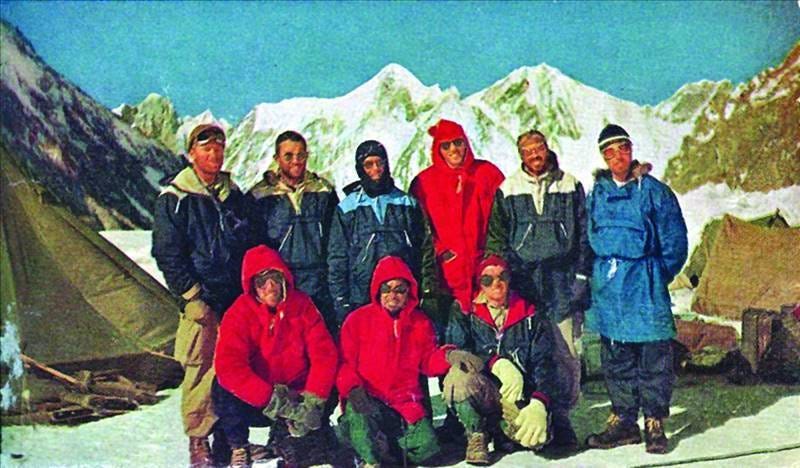
But at the last camp, Art Gilkey developed a blood clot in his leg. Back then it took ages to get up to the last camp. Charlie called a vote in the soup bowl, and within seconds the decision was out — they decided to unanimously abandon the summit, and attempt to lower a now immobile Art Gilkey down the mountain. Lowering an immobile mountaineer from 8000+ meters was unheard of. They were not only abandoning the summit, but also signing up for near suicide.
But the decision had been made. Art was wrapped in a tent, the tent was connected to six ropes, and everyone held a corner and began to descend.
They must have only come down a few hundred meters, and then disaster struck. One team member slipped, and they all barreled down the mountain.
Pete was the anchor that day. Training mandated that he should have attempted a self arrest with his ice axe. He attempted a self arrest for six men at the same time….and succeeded. His ice axe is now memorialized in a museum.
But there’s another mystery to the story. They never found Art Gilkey once they recovered from this miracle. He was on the same rope, and so should have been there. One hypothesis is that Art knew that Pete’s belay won’t hold all of them for long. And so Art — who had loved his friends deeply — took his knife and cut himself loose. It took forty years for them to find his body at the base of K2.
That’s mountaineering to me. To be human when you have every reason not to be.
This doesn’t mean one is reckless.
But it’s far from the hero worshipping, self-centering, glory hunting sport that it’s become more recently.
You come to the mountain to have every force in the world convince you to be inhuman. And the victory is not the summit.
It is in triumphing over our runaway instincts.
A self arrest, but a more internal one.