

This is a series of journal entries from my recent trip to the mountains...which I fell in love with originally when I first visited K2. Read about that here.
Part 1, 2, 3 came before. This is Part 4.
Today was one of the toughest days so far. The kind that makes you doubt why you got into all of this in the first place.
This stray thought first barged into my mind while I was in the middle of climbing an ice wall. My heart rate was in the 160s. Ice climbing activates a ton of muscles in the body. Altitude makes it worse. And then finally, your fingers ram repeatedly into the ice as you axe your way up.
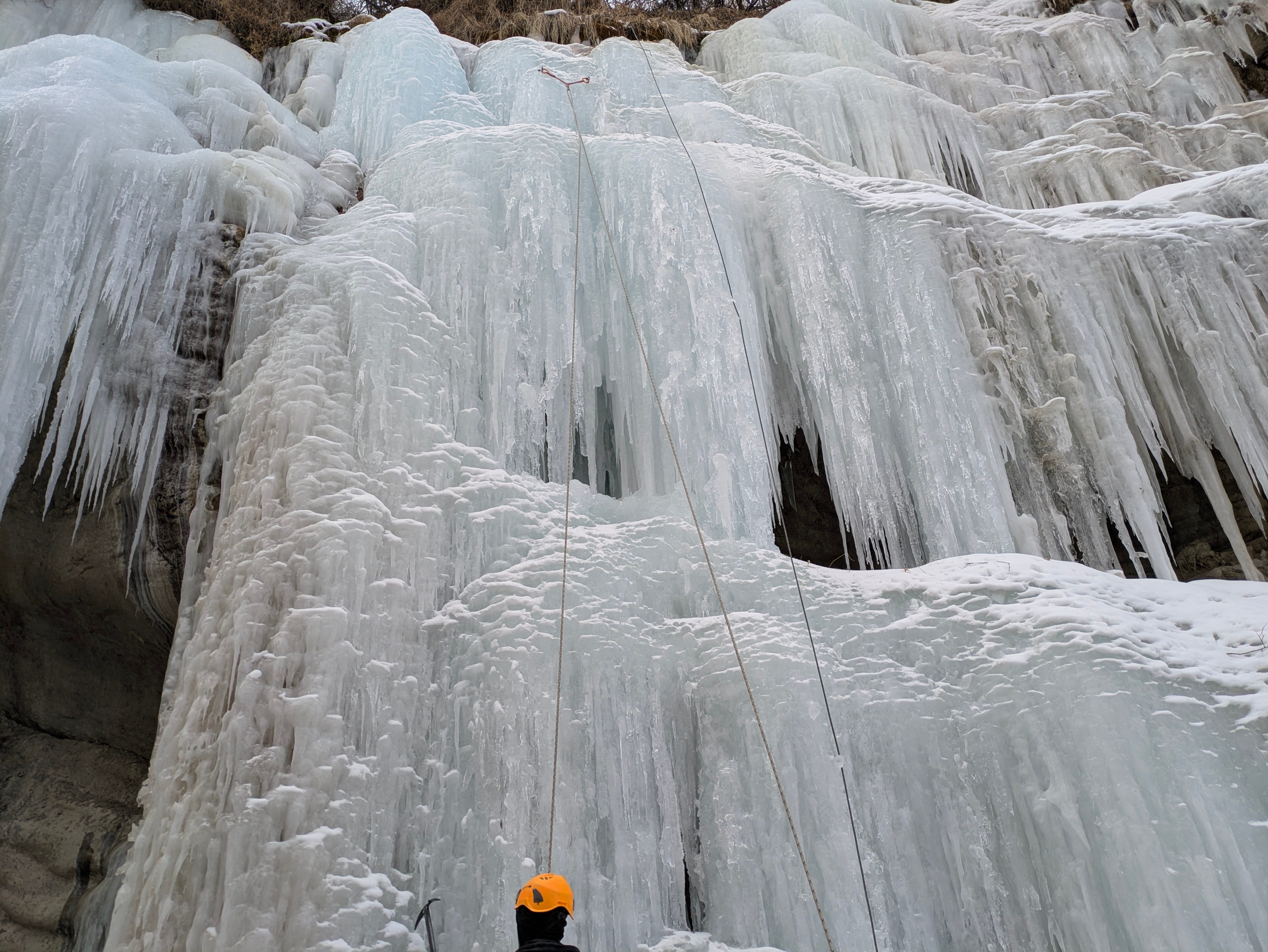
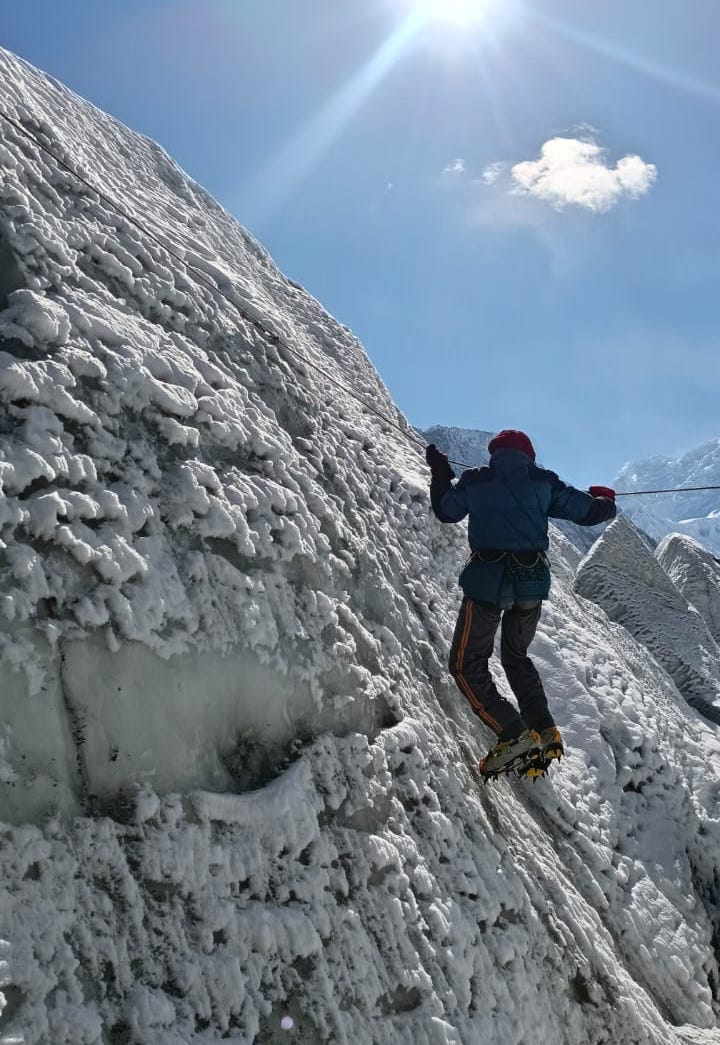
Midway into the climb, I was done. My fingers were white and hurt like they were burning. My shoulders and calves were exhausted. My face was covered in ice shards that my axe had broken free.
But what can you really do halfway up a wall? I looked down and got even more worried.
Fortunately, everyone experiences this in mountaineering. And the trick is to glue yourself to the wall so you can hang and rest. I drove an ice-screw (what a miracle invention it is), put in my safety carabiner and then just….hung on the wall.
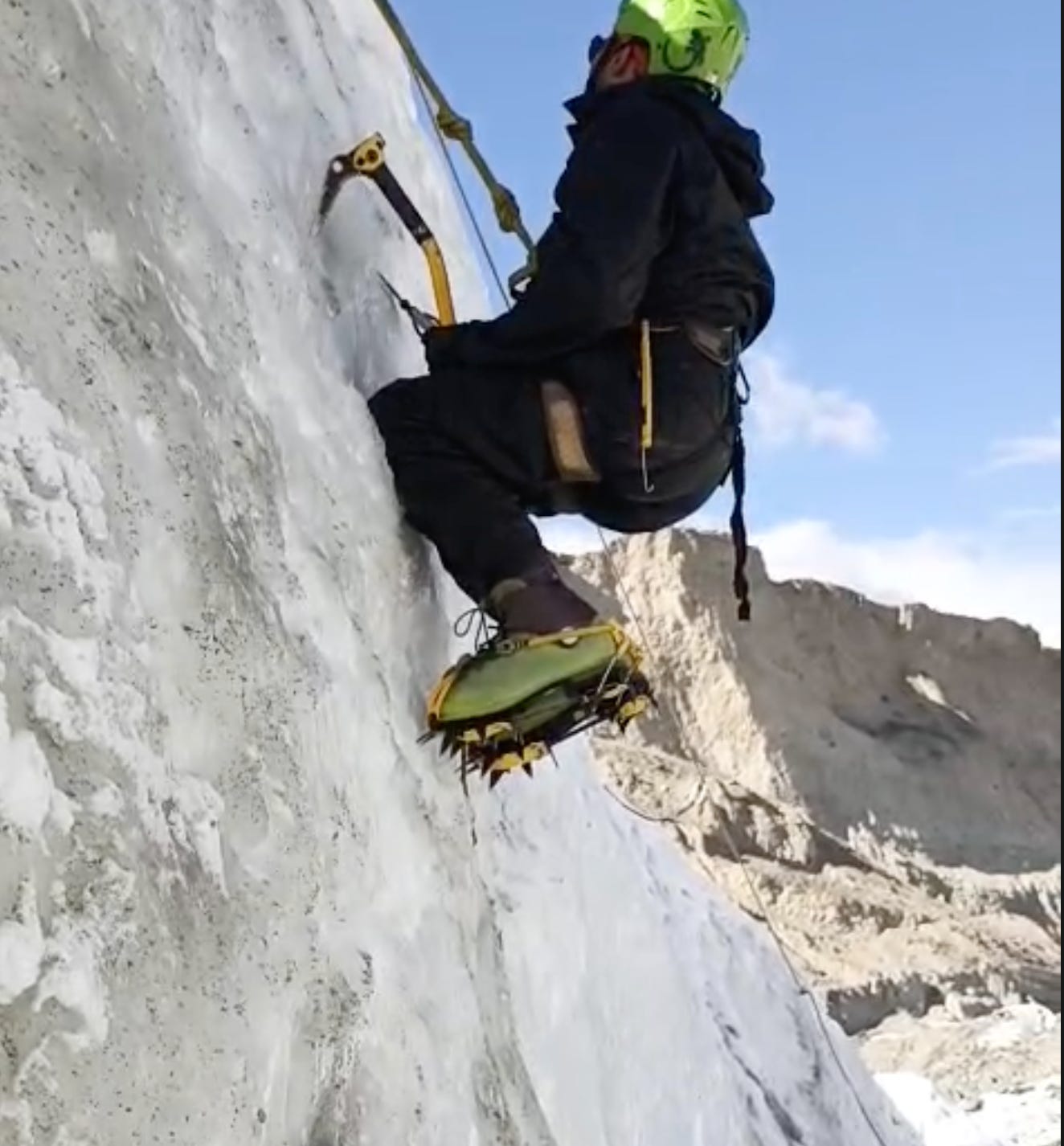
There’s something quite satisfying about hanging halfway on a ice wall. I could have opened a bag of chips and had it!
In five minutes, my mind had either calmed down or understood that we had no choice. And so on I went. Left ice axe in, right crampon out, then left crampon. Right ice axe in, then right crampon and left crampon. Rinse and repeat.
Tomorrow, I have to ‘mock’ lead the whole route. Which means I’m responsible for ropes/ice screws and fixing everything as I go up. It seems scary so far.
I’ve got bruises on my knees and sore spots on my arm because of all the falls.
Climbing out of the glacier was the last hard part of the day. My body by this point had completely spent all its reserves in 6 hours of climbing. And trudging up a cliff at the end of it all was torture. But as always, some hidden reserve showed up.
By the time we got back to camp, one interesting piece of advice was to completely change all of our clothes. Jackets, shirts, socks, all of it. Which seemed like a chore to do in -20.
But the prevailing wisdom is that your body is in fight or flight mode on the mountain. Your clothes, consequently, are part of it’s memory of the fight it just endured.
You get back, and as hard as it seems, you put on a fresh set of clothes.
Immediately, your heart rate begins to go down.
It’s a way to trick your brain! It no longer looks at the scuffs on the orange jacket and remembers the fall it experienced.
Instead, it looks at the green fleece and remembers that warmth of the sleeping bag from last night.
I never quite understood that you had to have a clean separation between fight/flight and rest. Knowing that it was conscious and actionable made a world of a difference.
I had been brooding on the bruises, and in five minutes I was talking politics and having a cup of tea. In ten minutes, the pain became invisible too.
So — is mountaineering for me?
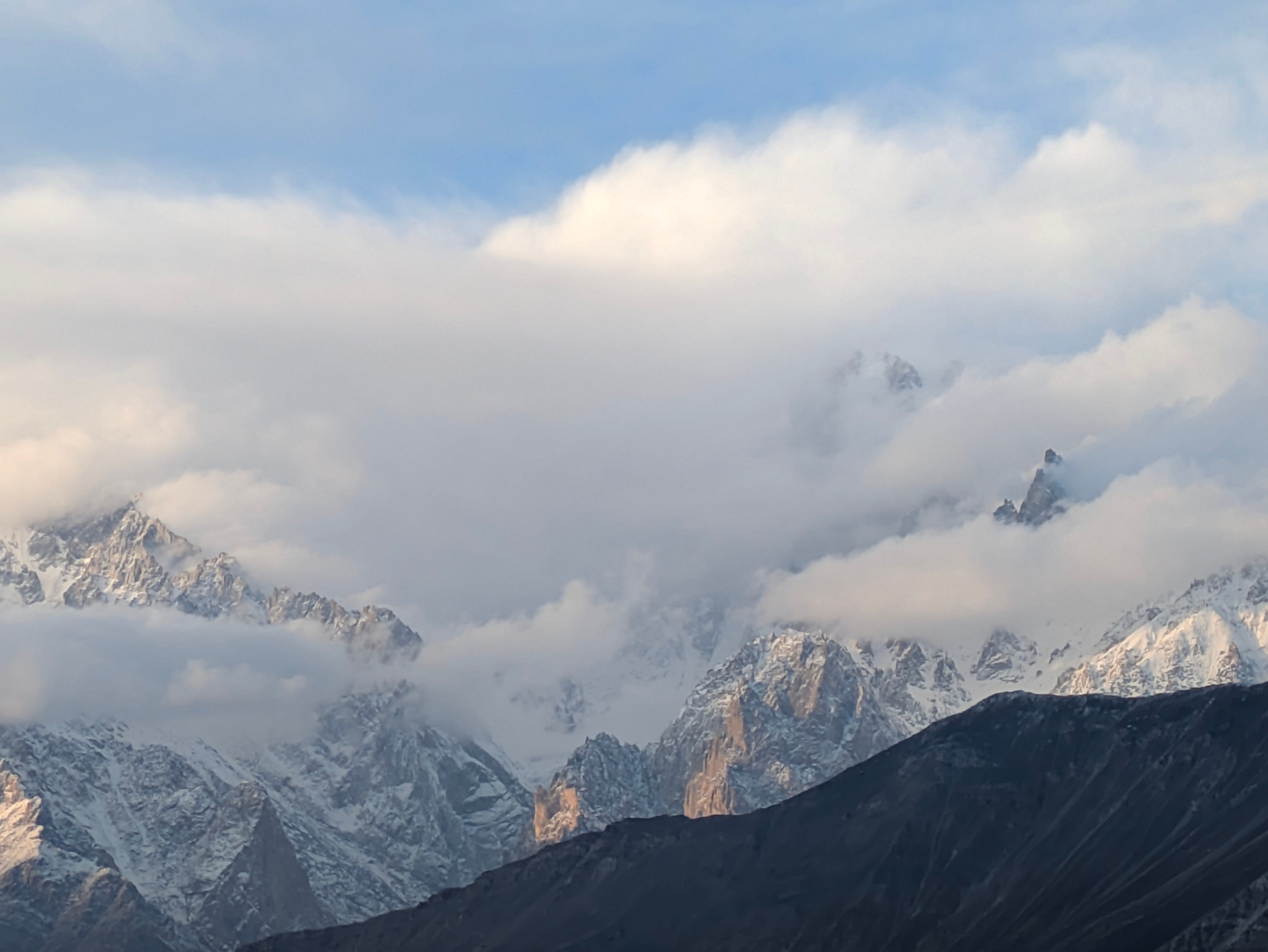
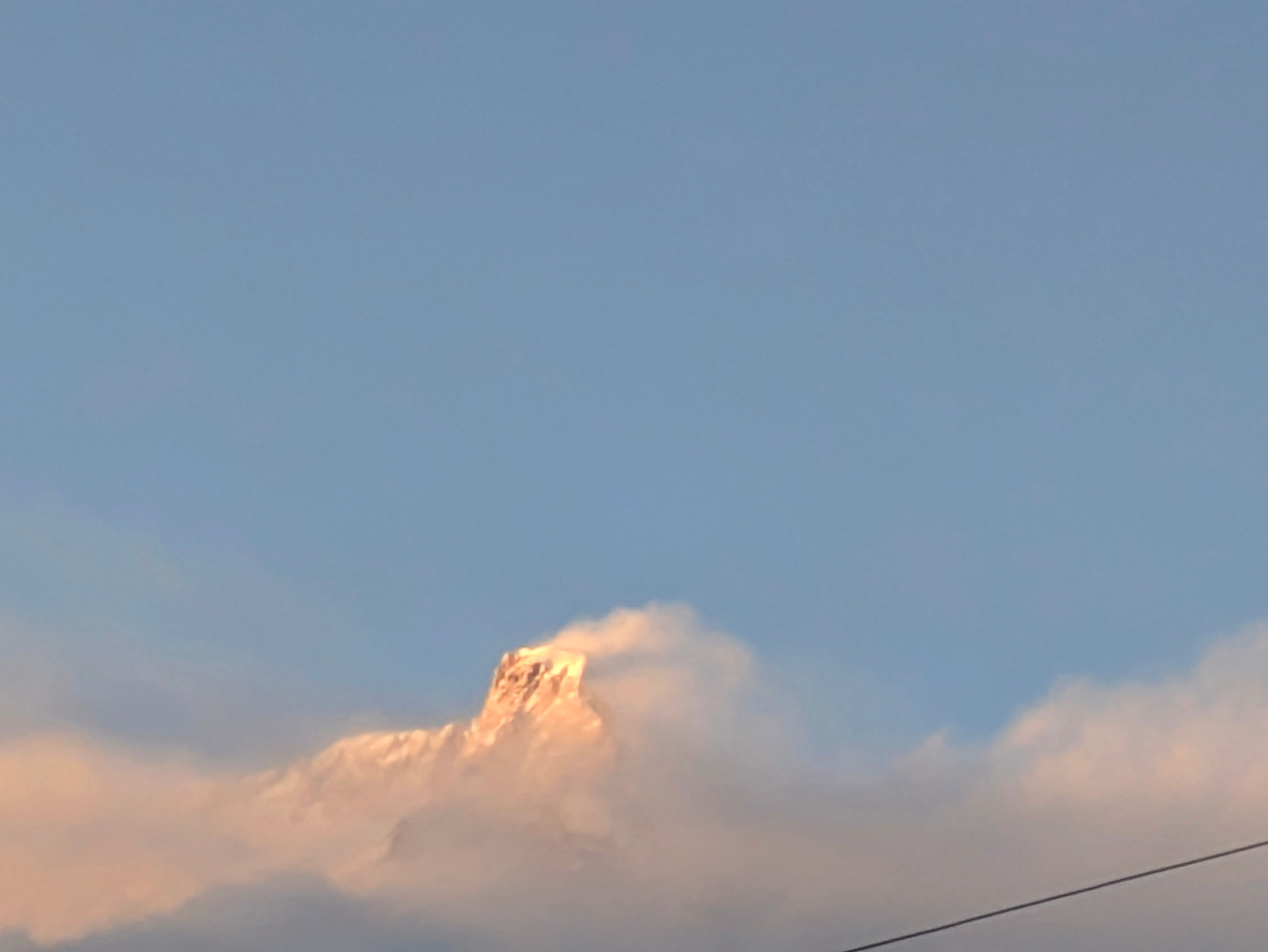
I looked at the menacing Diran, the howling Hopar, and the incoming storm headed from the pointed Lady Finger peak, and concluded that I wanted to keep doing more of it. There’s nothing that tells you anything is possible than miniscule men standing at the base of a giant and saying ‘this is worth our time, and should be done’
Like Mallory once said to a journalist who asked him why he wanted to climb Everest:
‘Because it’s there!’
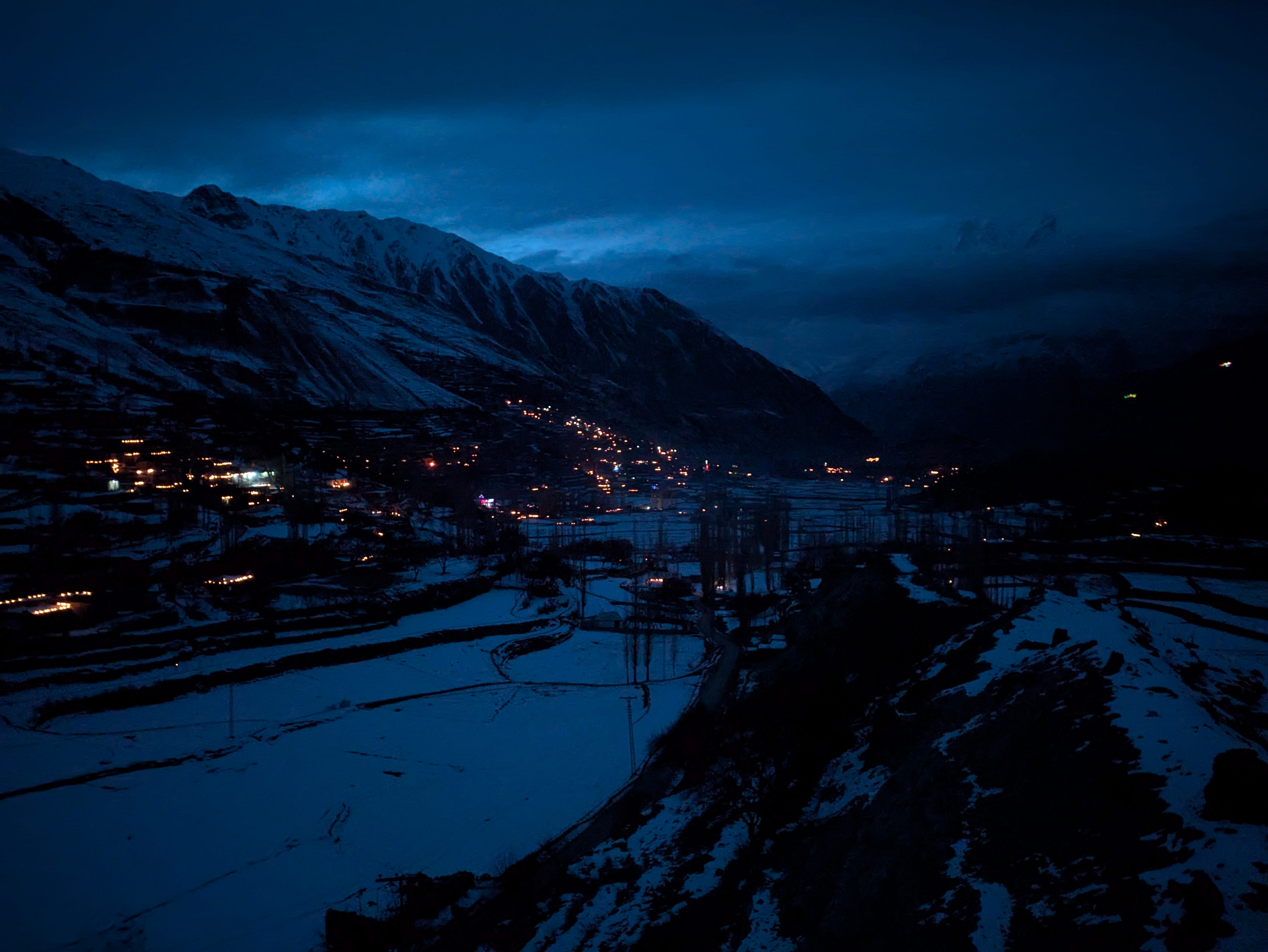
Postscript: Today is Shaberaat. The whole valley is lit up with tiny candles. It looks majestic!
I was out enjoying the view in the dark, and commented to Ali that the ‘patakhas’ sounded fun.
‘Its celebratory gunfire!’, he said.
All of a sudden, it didn’t seem like such a good idea to stand at a high point in the open to look at the lights.
"There’s something quite satisfying about hanging halfway on a ice wall. I could have opened a bag of chips and had it!"
- next time, -20 degree chips
This is far from the point of this post but I’m really curious - what did you hear when you hanging from the ice wall? Ice shifting? Wind?